Signalling networks
How are kinase signalling networks wired in cancer? We use phosphoproteomics and computational approaches to quantify pathway activity and identify regulatory circuitry.
We combine functional screening, proteomics and computational biology to understand how signalling networks are wired, rewired and translated into cancer phenotypes.
The same oncogenic pathway can behave differently across tumour types, patients and even cells within the same population.
The RAS–PI3K–MAPK axis provides a powerful paradigm: cancers frequently deregulate components of this network, yet the resulting signalling states and responses to targeted therapies can vary substantially.
We want to understand the regulatory mechanisms that create this heterogeneity—and how those mechanisms can be exploited therapeutically.
How are kinase signalling networks wired in cancer? We use phosphoproteomics and computational approaches to quantify pathway activity and identify regulatory circuitry.
Why do cancer cells with similar genetic backgrounds respond differently to perturbations and therapies?
How do epigenetic regulators reshape signalling networks and create distinct cellular states?
How does network rewiring enable intrinsic or acquired resistance to targeted inhibitors?
Can functional and molecular signatures identify vulnerabilities and rational drug combinations?
Cell-based assays, viability measurements, drug-response profiling and combination screening.
Quantitative proteomics, phosphoproteomics, surfaceomics and LC–MS/MS.
KSEA, response-marker analysis, machine learning and statistical modelling.
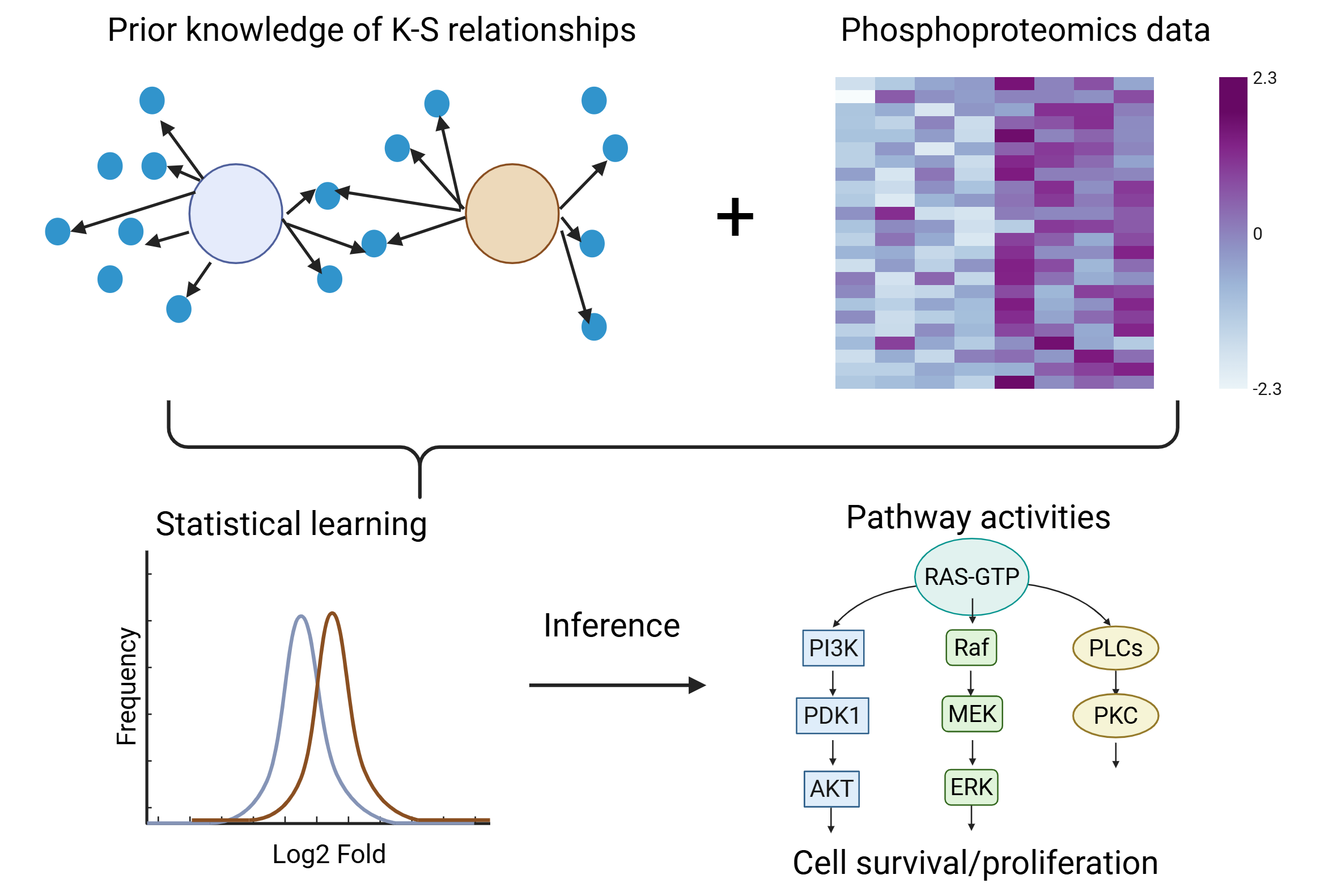
Phosphoproteomics provides a high-dimensional view of signalling. We use approaches such as kinase-substrate enrichment analysis to infer the activity of signalling enzymes from their downstream substrates.